When it comes to waterproofing flat slab or concrete roofs, two systems are often compared: TPO (Thermoplastic Polyolefin) and bitumen (torch-on or modified bitumen).
Durability & Longevity
TPO membranes typically last 20–30 years thanks to their strong resistance to UV rays, chemicals, and environmental conditions. In comparison, bitumen systems usually last just 3–5 years and can degrade faster under UV exposure — often requiring more frequent maintenance or full replacement within a decade.
And when installed by Rubber Roofs™, your Köster TPO system includes a 20-year maintenance-free warranty, plus free 5-yearly inspections — making it a true fit-and-forget solution that protects your property for decades.

Energy Efficiency
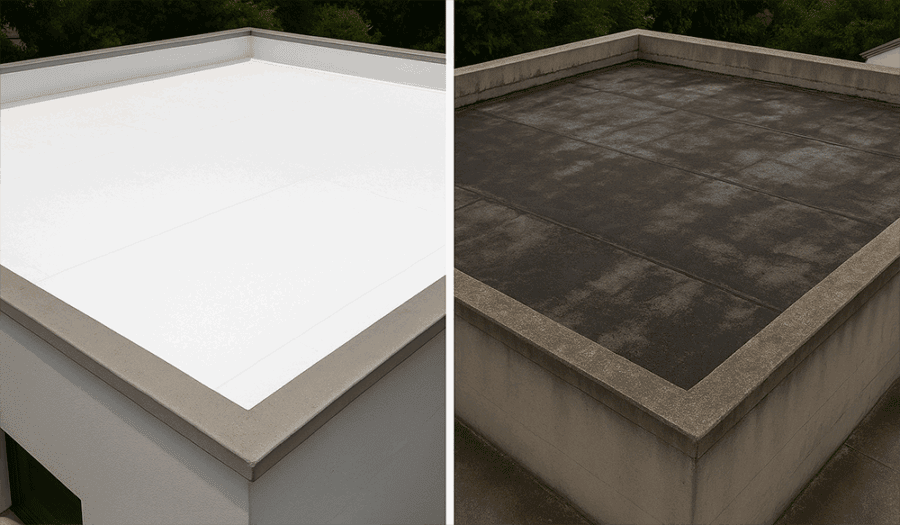
TPO has a highly reflective surface, which helps reduce heat absorption and lowers cooling costs — a major advantage in hot climates. Many TPO systems are even Energy Star-rated, meaning they actively contribute to better energy performance.
Bitumen’s dark colour absorbs heat, often making buildings warmer inside and increasing reliance on air conditioning — and your energy bills.
Seam Strength & Waterproofing
TPO membranes use hot-air welded seams, forming a watertight bond that’s 3–4 times stronger than those of bitumen systems.
Bitumen relies on adhesives or torch-applied seams, which are more vulnerable to cracking, lifting, and eventually water damage due to weathering over time.
Maintenance & Repairs
TPO requires less maintenance over its lifespan. It’s naturally resistant to mold, algae, and chemical exposure — all of which can cause premature wear in other roofing systems.
With Rubber Roofs™, you also get free 5-yearly inspections as part of your Köster TPO system — so even minimal maintenance gets professional attention, just to be sure everything stays on track.
Bitumen, on the other hand, is more vulnerable to wear and tear. It can develop cracks, blistering, and leaks, often requiring regular inspections and patching just to keep up.
Installation Process
TPO is quicker and safer to install. It doesn’t require open flames — instead, it uses heat welding or adhesives, cutting down on fire risk and time on site.
Torch-on bitumen systems, by contrast, rely on open flame application, which not only poses safety risks but can also slow down the job due to extra precautions.


Environmental Impact
If sustainability matters to you, TPO is the better choice. It’s recyclable, free from hazardous chemicals, and designed to last — which means fewer replacements and less waste over time.
Bitumen, by comparison, is petroleum-based and not recyclable. With a shorter lifespan and more frequent need for repairs or replacement, it leaves a bigger environmental footprint.
Conclusion: The Smarter Choice for Long-Term Protection
Choosing the right waterproofing system isn’t just about the cost today — it’s about what your roof will need five, ten, or twenty years from now.
Bitumen systems may offer a lower upfront price, but they often come with higher long-term costs: more maintenance, more frequent replacements, and increased energy bills.
TPO, especially Köster TPO, is a modern solution built to last. It’s more durable, energy-efficient, safer to install, and far easier to maintain.
When you partner with Rubber Roofs™, you get more than just a quality membrane — you get a 20-year maintenance-free warranty, free 5-yearly inspections, and a team that ensures your roof works as hard as you do.
Get in touch with our team: https://rubberroofs.co.za/