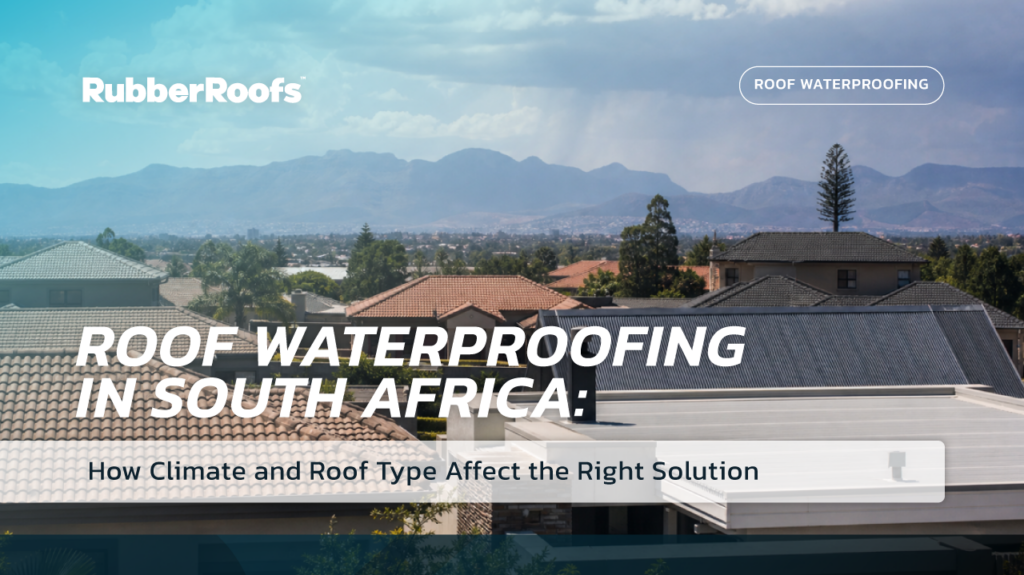
Roof waterproofing in South Africa is rarely a simple product choice. Heat, UV exposure, seasonal rain, coastal conditions and roof movement all change what a sensible solution looks like. That is why the same recommendation should not be applied to every property.
Rubber Roofs works across South Africa on residential, commercial and industrial roofs and lists flat, sloped, tiled, IBR and concrete surfaces among its project types. That range is a useful reminder that roof waterproofing needs to be matched to both climate and substrate, not only to budget.
Sun and UV matter more than many owners expect
South African roofs often absorb intense sunlight for long periods. Over time, UV exposure can affect coatings, joints and older surfaces. When you compare systems, ask how the material is expected to handle long exposure, seasonal expansion and the temperature swings your area typically experiences.
Rainfall pattern changes the risk profile
Some roofs deal with short heavy downpours. Others face longer rainy periods or recurring wind-driven rain. Water that rushes through blocked outlets or sits on low points places pressure on weak details fast. Before choosing a system, confirm whether drainage correction, crack repairs and detail reinforcement are part of the scope.
Coastal and inland conditions are not the same
Salt air, moisture exposure and corrosion risk can shift the priorities on coastal properties, especially on metal roofs and exposed fittings. Inland properties may have different heat and storm patterns. A good assessment should account for where the building sits, not only what the roof is made from.
Roof type should guide the recommendation
Tiled roofs, IBR roofs, concrete slabs and pitched sheeted roofs all move and drain differently. A useful quote should explain why the proposed system suits that specific roof type and what preparatory work is required first. If the reasoning is vague, ask for it in plain language.
Preparation remains part of the waterproofing decision
Even the best system can disappoint when the surface underneath is not ready. Cleaning, rust treatment, repairing laps, treating cracks and checking penetrations are part of the real waterproofing conversation. That is one reason owners should compare scope and method, not only price.
Map the building's exposure before comparing systems
Two properties in the same city can place different demands on a roof. A roof shaded for part of the day may dry more slowly, while an exposed roof may experience stronger heat cycles. Nearby trees can increase debris around outlets. Taller buildings may face more wind at edges and penetrations. Coastal air can make corrosion at metal components a greater concern. Record these site conditions during the inspection so the recommendation is based on the building itself rather than a broad regional label.
Flat roofs need falls and outlets to work together
Waterproofing on a flat or low-slope roof should be considered together with drainage. Look for ponding, blocked outlets, damaged gratings and low points where water remains after rain. A new surface layer cannot by itself correct every fall or outlet problem. Ask whether the scope includes drainage corrections or only treatment of the existing surface. If water is expected to remain in certain areas, the contractor should explain how that affects the proposed approach and ongoing inspection.
Sheeted roofs bring movement, fasteners and corrosion into the discussion
IBR and other metal roofs expand and contract as temperatures change. Laps, fasteners, ridge details and penetrations can become vulnerable when components loosen or corrosion develops. Ask how rust will be treated, how loose or failed fixings will be addressed and how movement is accommodated at joints. Painting over corrosion or sealing a single fastener may not deal with the wider condition. The inspection should distinguish isolated defects from a roof-wide maintenance issue.
Tiled roofs require more than coating the visible surface
Broken or displaced tiles, ridge details, flashings, valleys and the underlay can all influence water entry. Ask which components will be checked and whether damaged tiles or bedding need repair before any waterproofing treatment. Foot traffic can also damage tiles during inspection or work, so access should be planned carefully. A tiled-roof proposal should clearly separate repairs to roof components from any coating or sealing that may be recommended.
Concrete roofs need crack and joint assessment
Concrete may show shrinkage cracks, movement cracks, failed joints or deterioration around outlets and parapets. The important question is not only whether a crack can be covered, but why it formed and whether it is still moving. Structural concerns require the appropriate professional assessment rather than being hidden beneath a coating. Ask how cracks will be prepared, which joints remain movement points and how wall-to-roof junctions will be handled.
Use seasonal timing to improve the inspection
Evidence can look different in a dry spell and after sustained rain. If possible, retain photographs and notes from wet conditions even when the formal inspection happens later. Discuss expected curing conditions and what weather window the work requires. A responsible programme should allow for surface preparation and application conditions rather than treating every day as interchangeable. This is especially relevant when a roof must be dry before particular stages begin.
Compare recommendations through questions, not product names
Ask each contractor why the proposed system suits the roof material, exposure, drainage and defect pattern. Request a clear explanation of preparation, detail work, limitations and maintenance. This approach makes roof waterproofing in South Africa a building-specific decision. Climate establishes the pressures, but the roof type and its present condition determine how those pressures should be addressed.
Create a roof-specific brief
Before requesting the final recommendation, summarise the roof type, age, exposure, leak history, drainage observations and earlier repairs on one page. Ask the contractor to correct anything inaccurate. This brief creates a shared starting point and reduces the risk that a quotation is based on a different assumption. It also gives the owner a useful record for later maintenance.
If you are comparing roof waterproofing options in South Africa, ask Rubber Roofs (https://rubberroofs.co.za/) to assess your roof type, exposure and current condition before you settle on a system.